Journey to the Last Frontier
Terry D. Garcia, CEO of Exploration Ventures
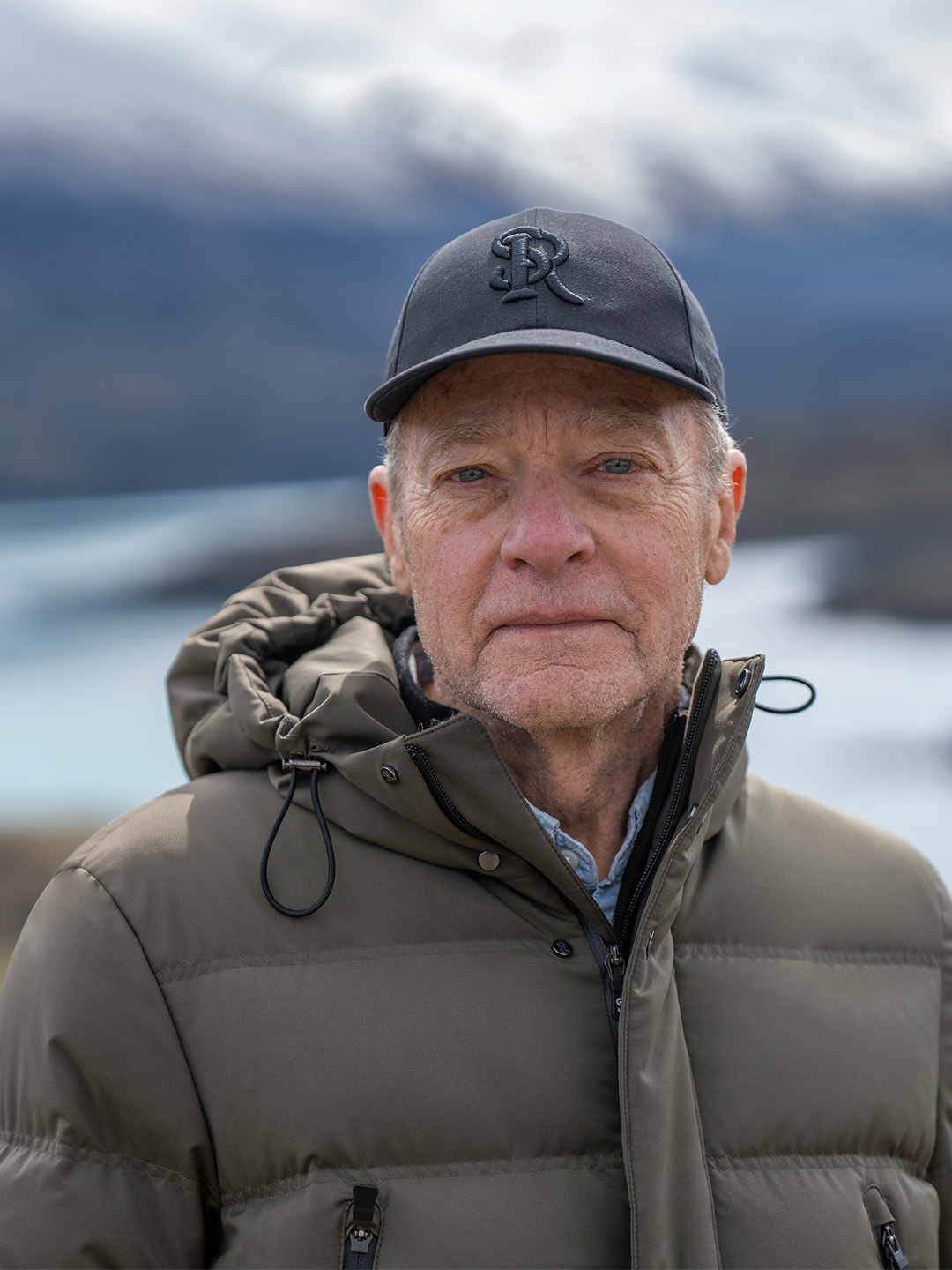
The search for the unknown—the urge to discover what lies just beyond the horizon—has always defined us. It was that spirit of exploration that first drew explorers to the southernmost tip of South America centuries ago. And it is in that same spirit that we have chosen Patagonia as the setting for our latest expedition, Mission Patagonia & Tierra del Fuego. The writer Bruce Chatwin called Patagonia “the farthest place to which man walked from his place of origins,” and “a symbol of his restlessness.” This is a realm that challenged Magellan’s fleet, inspired Darwin’s revolution in thought, and served as an embarkation point for explorers like Ernest Shackleton during the heroic age of polar exploration.
A Legacy Carved by Explorers
This southernmost frontier has always drawn the curious and the brave. In 1520, Ferdinand Magellan sailed through the treacherous waters at the tip of the continent, discovering the strait that now bears his name—the first known western route through the Americas. Describing the voyage, he said, “The sea is dangerous and its storms terrible, but these obstacles have never been sufficient reason to remain ashore… Unlike the mediocre, intrepid spirits seek victory over those things that seem impossible.” Nearly a century later, Dutch explorer Willem Schouten rounded the stormy island of Cape Horn, opening a second—albeit much more perilous—passage to the Pacific. Centuries later, Charles Darwin spent three transformative years exploring these lands and coasts aboard HMS Beagle. While his time in the Galápagos is more widely known and celebrated, it was amidst the steppes, glaciers, and fjords of Patagonia that his revolutionary thinking began to take shape. He gathered fossils of extinct mammals, observed dramatic geological features, and reflected on human variation through his encounters with the Indigenous Fuegians. These experiences would form a foundation for his theory of evolution. Today, exploration in this region continues, covering a range of disciplines including conservation, climatology, paleontology, and oceanographic research.
Land of Extremes
Charles Darwin captured what moves every explorer entering Patagonia: “It is scarcely possible to imagine anything more beautiful than the beryl-like blue of glaciers...” From the granite spires and glacial valleys of Torres del Paine to the windswept tundra and sea beyond the beech forests of Tierra del Fuego, this is a land of breathtaking scale and elemental force. Glacial walls like those of Torres del Paine’s Grey Glacier calve into brilliant turquoise lakes, while vast skies stretch above open steppes. In fjords near Puerto Natales, elephant seals haul out on rocky shores, framed by the dramatic rise and fall of the tides. Throughout our journey, we witnessed both the region’s abundant life and the harshness of survival at the world’s end. This is a landscape that challenges, humbles, and transforms those determined to go beyond the edge of the known. Such a spirit recalls to my mind another recent memory: the presentation of our work at The Explorers Club in New York a couple of years ago, in that renowned home of genuine “mission impossible” ventures, where values and knowledge are passed down from the pioneers who have always led humankind to the conquest of new frontiers.


Stewardship as Modern Exploration
When Darwin observed these southern lands in the 1830s, he marveled at their seeming permanence. He wrote, “there appears no limit to their duration.” But today we know better. Patagonia’s glaciers— some of the most extensively studied in the Southern Hemisphere—are retreating at an alarming rate. Biodiversity is under pressure as human/wildlife conflicts increase. Ecosystems once thought unshakable are now showing signs of stress. Yet, there is reason for hope. Like in our previous expeditions, we encountered modern explorers— researchers and conservationists—working to protect this fragile environment. We had the chance to meet conservationists and see firsthand their efforts to safeguard not only the puma but also the area’s broader natural and cultural heritage. Working with local communities, they are making important progress toward promoting coexistence between wildlife and ranching. Just as early explorers mapped land and sea, these explorers are charting what can be saved.
Why We Still Explore
In Punta Arenas, polar explorer Ernest Shackleton, with the support of the Chilean navy, organized the rescue mission that saved his stranded crew from Elephant Island. On the final day of Mission Patagonia & Tierra del Fuego, I visited the Monumento al Piloto Luis Pardo, which honors the successful rescue by the Chilean Navy ship Yelcho, commanded by Captain Luis Pardo. Standing there, I thought of the many explorers of the past who braved these waters and the discoveries still waiting to be made. It was a powerful reminder of why exploration endures. The French writer and poet René Daumal once wrote: “You cannot stay on the summit forever; you have to come down again. So why bother in the first place? Just this: what is above knows what is below, but what is below does not know what is above.” We climb the mountain not to stay at the summit, but to see the world from a vantage point that changes how we live in the valley. And when our explorations end, as they inevitably do, it is that memory that stays with us and continues to guide our lives. Our journey to the bottom of the world confirmed a core truth shared by all Stefano Ricci expeditions: the real discovery isn’t the place itself, but how it changes us. We climb, descend, voyage out, and return transformed, carrying back a perspective only those who have stood at the edges possess.