Stefano Ricci Explorer Mission Bhutan

There comes a moment when travel becomes a geography of the soul. It happened in Bhutan, the Land of the Thunder Dragon, a realm suspended between stone and clouds, where the tenth Stefano Ricci Explorer mission unfolded. A symbolic milestone shared with master photographer Steve McCurry, in a journey defined by the pursuit of beauty, spirituality and respect for tradition. The mission was enriched by encounters of extraordinary significance: an audience with His Majesty King Jigme Khesar Namgyel Wangchuck, followed by meetings with Her Majesty Queen Jetsun Pema Wangchuck and Her Majesty Queen Mother Gyalyum Sangay Choden Wangchuck, a longstanding patron of arts and craftsmanship. A gracious welcome that celebrated the profound connection between the Maison and Bhutanese culture.

The Land of the Thunder Dragon
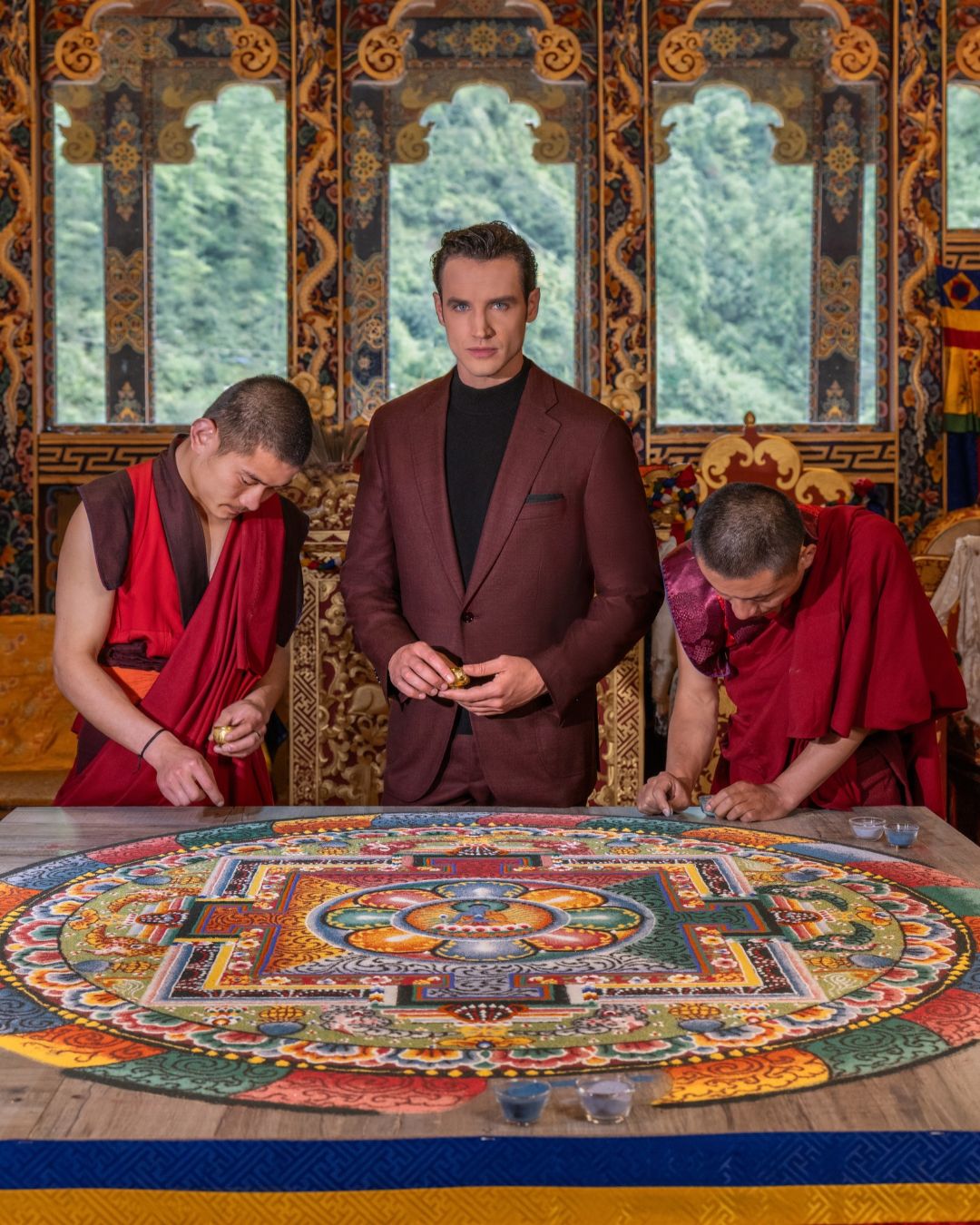
The journey began with the ascent to Paro Taktsang, the celebrated Tiger’s Nest Monastery, perched at an altitude of 3,120 metres on a sheer cliff rising 900 metres above the valley. Amid incense and alpine pines, every step became an exercise in contemplation, a prelude to the expedition’s greatest challenge. On the Dagala Plateau, the Land of a Thousand Lakes, at 4,500 metres, a sudden sleet storm and a sharp drop in temperature forced the team into a demanding descent: ten hours of walking, covering twenty-three kilometres through mud, forests and rocky terrain, in darkness illuminated only by torchlight. An extreme experience that revealed the true essence of exploration: the courage to face the unexpected and the humility to acknowledge the power of nature. While part of the expedition confronted the mountain peaks, the rest of the team discovered the tranquillity of Cheri Base, surrounded by prayer flags and ancient monasteries. In the Thimphu Valley, a visit to Pangrizampa, home to the School of Astrology, revealed a spirituality deeply woven into everyday life, captured in the spontaneous sight of young monks playing in the courtyard. At Tara Temple, the journey reached one of its most moving moments. Two mandalas of coloured sand, meticulously created by the monks, were ceremonially dissolved amid mantric chants, drums and traditional Cham masked dances. An extraordinarily symbolic gesture, offering a powerful reminder of the impermanence of all earthly things. The light of the Himalayas then accompanied the mission to Punakha Dzong, the Palace of Great Happiness, standing at the confluence of the Pho Chhu and Mo Chhu rivers. From the first light of dawn to the rituals of archery, Bhutan’s national sport, and the sunset over Dochula Pass, with its 108 stupas, every encounter revealed the harmony between nature, culture and tradition. The final stage led the team to Chele La Pass, at 3,988 metres, where prayer flags fluttered against breathtaking views of the snow-covered peaks of Jomolhari and Jichu Drake. The subsequent descent towards Paro Rinpung Dzong, a fortress embodying Bhutan’s spiritual and civic identity, marked a fitting farewell to this extraordinary land.


Stefano Ricci Fall Winter 2027-28
A unique country inspires distinctive menswear: contemporary yet timeless, sophisticated yet understated, traditional yet forward-looking. Set against Bhutan’s landscapes, the new Stefano Ricci Fall/Winter 2027-28 Collection finds harmony with Nature. Created for a curious Explorer drawn to beauty and quiet elegance, it offers a refined escape from modern life. Soft silhouettes and exceptional materials bring warmth and effortless comfort to winter dressing. Noble fibres and fine fabrics express a genuine respect for nature. Luxury is never stated loudly; it is revealed in the lightness of a garment, its construction and the pleasure of wearing it. Responding to changing winters, featherweight thermal parkas have light padding and discreet mink fur trims at the hood. Baby shearling blousons have clean, delicate lines, while an unstructured black crocodile overshirt combines ease with neoclassical refinement, making luxury feel almost everyday.

Steve McCurry
"Bhutan already held a place in my heart. I have been there many times, and each return has deepened my affection for its mountains and valleys, its monasteries, and the beauty of its traditions. Above all, I am moved by how spiritual practice remains visible in the gestures of everyday life. It belongs to communities and families as much as to monks. You encounter it in celebrations, but also in the quiet course of a morning, when someone makes time for prayer before the rest of the day begins."

