The weight of history, the hope of the future
The weight of history, the hope of the future
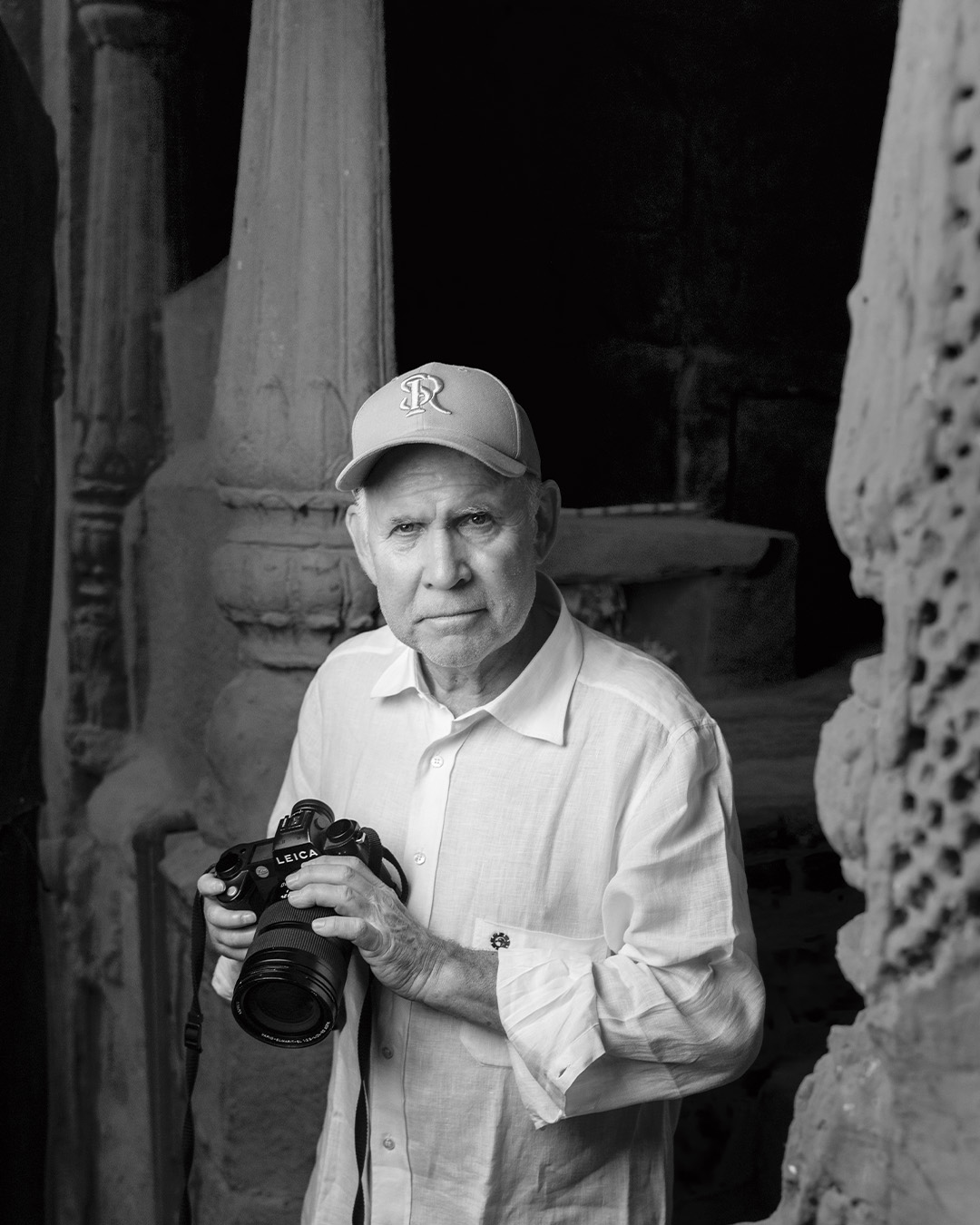
Steve McCurry, Renowned Photographer and Visual Storyteller
India, to me, is an ever-changing, ever-present experience. It is a place that refuses to be defined or captured entirely in one image. The landscape, the people, the colors—they’re all so vibrant, so immediate, and yet they seem to transcend time. I have spent years wandering its streets, from the crowded alleys of Mumbai to the tranquil banks of the Ganges in Varanasi. And each time I return, it feels like I’ve never seen the country before. There’s a new layer, a deeper shade of emotion, that reveals itself to me. I’ve traveled to India many times, and each time, it feels like a new discovery. One of my favorite photographs from India, I took during a dust storm. I was driving down a road in Rajasthan, and it was sunny and about 110 degrees Fahrenheit, when the sky suddenly went dark and the dust storm began. My first instinct was to roll up the windows of the taxi to protect my camera, but then I remembered the whole purpose of my trip there and realized that this moment was a fleeting thing. I realized I was presented with a magical opportunity that doesn’t happen too often. As the storm got stronger and more dramatic, the air became thick with dust. Through a cloud of dust, I could see these women huddled together off the side of the road, protecting themselves from the driving wind. This region had been suffering from a drought for more than a decade, and these women were singing a prayer for rain. I got out of the car and shot a roll of film of this serendipitous moment. After only moments, the storm disappeared, about as quickly as it started. The sun immediately came out, as if nothing had ever happened.
The first thing you notice when you step into India is the light. It seems to bathe everything in a golden hue, transforming the mundane into something extraordinary. The air itself carries a sense of promise, of something spiritual and transcendent. It’s in the eyes of the children playing in the streets, in the hands of the elderly praying in temples, in the smiles of the faces you meet along the way. India is a place where the extraordinary and the ordinary coexist in ways that are difficult to explain, but impossible to ignore. India is not just a land of monuments. It is a land of contrasts—of great wealth and grinding poverty, of ancient traditions and modern aspirations, of peace and chaos. I’ve witnessed this contradiction in every corner of the country. You’ll find people who are among the poorest in the world, yet their spirits are unbroken. They possess a strength that is hard to put into words. And then you’ll see the sprawling luxury of new cities, the tech hubs, the fastgrowing middle class that has a whole new dream. But it’s not the juxtaposition of these elements that draws me to India. It’s the sense of resilience and hope that permeates every inch of the country. In the faces of the people, I see both the weight of history and the hope of the future. The elderly man sitting at the steps of a temple, his body hunched with age, carries stories of countless generations in his eyes. The young girl in the red dress holding her mother’s hand, her face full of wonder, represents the endless possibilities that India promises.


I’ve spent hours sitting in the markets of Jaipur, watching as the streets pulse with life, colors spilling out from every corner. The smells of incense and spices fill the air, mixing with the chatter of vendors and the sounds of the traffic. There’s something both exhilarating and overwhelming about it all—the sheer volume of life, the pace at which everything moves, and yet, there’s a sense of stillness amidst the chaos. One of the most striking aspects of India is the way time seems to slow down when you are there. You can spend hours observing a single moment, watching people go about their daily rituals, and it feels like a story unfolding before your eyes. There’s a sense of patience in India, a quiet acknowledgment that life moves at its own pace, and we are just along for the ride. It is impossible to capture India in one photograph or even in one lifetime of travel. The country reveals itself slowly, piece by piece. The more you learn, the more you realize there is to discover. The faces I’ve photographed over the years, each with their own unique story, are just fragments of the larger narrative. Each photo is a moment frozen in time, yet it’s always changing. India is never static; it is a country in motion, in flux, evolving and growing while still holding on to the threads of its ancient past.

But beyond all the history and contrasts, what I have found in India is a sense of connection, a shared humanity. The smiles of the children, the warmth of the elderly, the open arms of the people you meet—they transcend language and culture. No matter where you are in the world, India teaches you that life is fleeting, and it is these small moments of connection that make everything worthwhile. I’ve often thought about why India has such a magnetic pull on me, and I think it comes down to the sheer humanity of the place. There’s something about the way the people live with an intensity, a presence, that makes you feel more alive just by being near them. And yet, there’s a humility in how they approach life— an acceptance of the things they cannot change and a deep reverence for the things they hold dear. In the end, India is not a place you can ever truly leave. It stays with you long after you’ve left its shores. It’s in the way you see the world, in how you understand humanity, in the way you appreciate the small moments of grace that pass by unnoticed. India, for all its chaos and contradictions, is a place that teaches you to see with more than just your eyes. It teaches you to see with your heart.
