The land of King and Maharajas
The Land of King and Maharajas
Filippo Ricci, Creative Director of Stefano Ricci
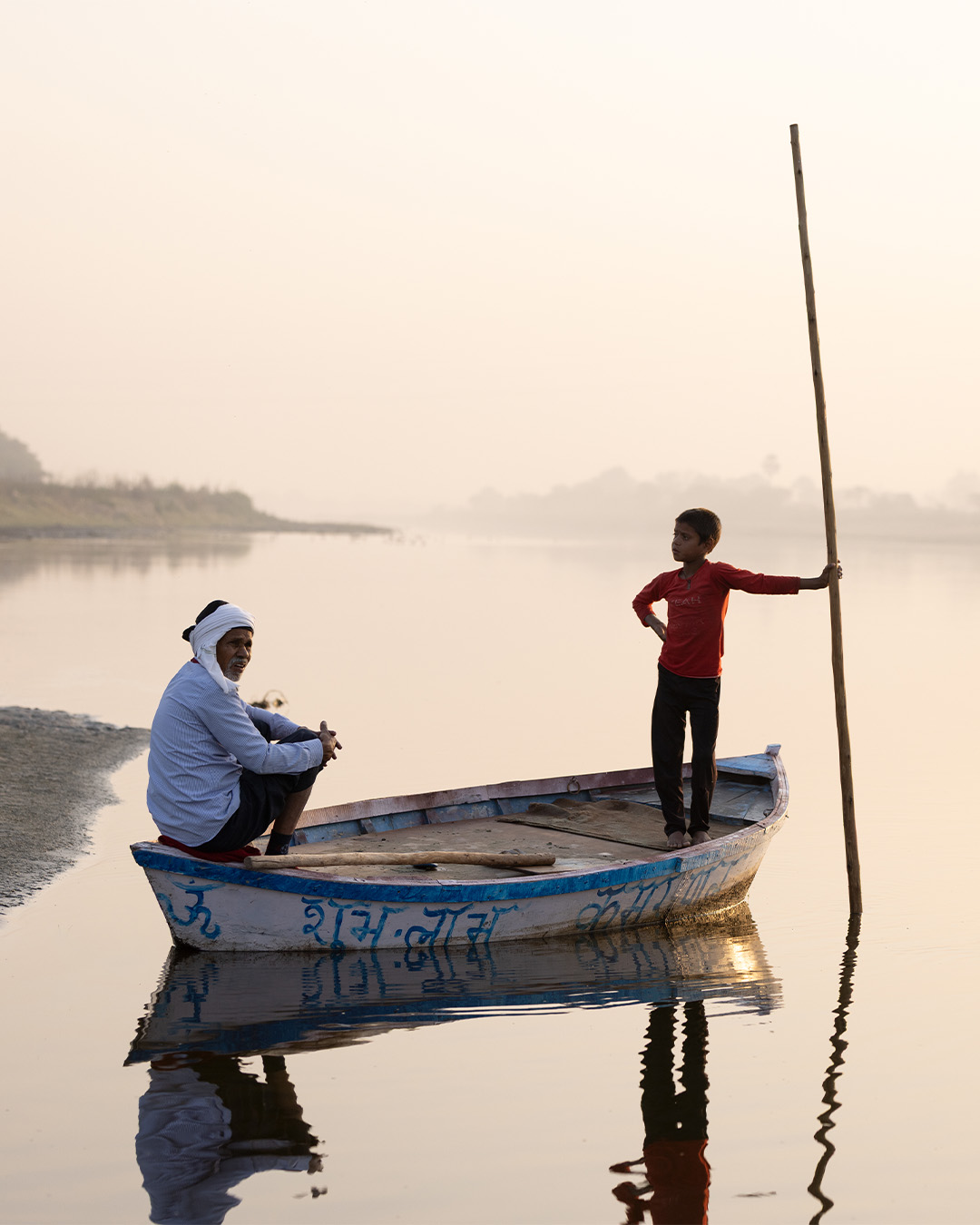
Above all, there is an all-encompassing sense of India, a belonging to a world steeped in innate spirituality, one that embraces the healing traditions of Ayurveda and thrives on fragrant, vividly coloured food, balanced by the delicacy of lassi and the rich flavour of chai. It is a fragile yet eternal allure, suspended in time, magical, like the white marble of the Taj Mahal veiled in the mists of dawn and set ablaze by fiery sunsets. A symbol of life entwined with death, bound by spirituality yet also by carnality. I rediscover these feelings in the words of Alberto Moravia in An Idea of India when he writes: “...you should sense India the way you sense, in the darkness, the presence of someone unseen, someone silent, yet undeniably there.” In my notebook, there remains space for a single word, one that is a dream. Maharaja. Rajasthan, as I wrote at the start, is a land of Kings and Maharajas, an ancient title once reserved for sovereigns. From books, I learned that the first rulers to adopt this title were the Buddhist kings of the Sailendra dynasty in Java between the 8th and 9th centuries, where Indian culture had long taken root. Later, the Sailendra Maharajas were expelled, continuing their reign in the Malay Peninsula and Sumatra. In India, the term was bestowed upon kings ruling vast regions, though from the Middle Ages onwards, it was also used by lesser rulers who claimed descent from ancient Maharajas. Over time, it became the title of powerful feudal lords, symbolising their autonomy from the reigning family. The suffix raja referred to the rajasuya, a ritual of royal consecration that reminded the sovereign that no matter how powerful he became, the god Mrtyu was ever-present and had to be appeased. It was vital to defer the final step, to maintain kingship through prayers, spells, and the symbolic Palasa wood amulet, once belonging to the gods themselves, ensuring the loyalty of vassals and subjects. And so, a journey unfolds, tracing a path through Agra, Fatehpur Sikri, Jaipur, Jodhpur, and down to Udaipur, where we met a real Maharaja in his residence. Perhaps the most Westernised moment of our trip. A place where history came full circle. A history flowing back to Mugnone, a stream skirting the village of Caldine, in our Fiesole, where our own productive reality is reflected. Remarkably, this stream was elevated to the status of a river in 1870 when Maharaja Rajaram Chuttraputti of Kolhapoor lent his name to the area and to the Indiano bridge in Florence. A story you will find at the end of this publication, one that intertwines two lands in the spirit of solidarity and respect.
My attention was drawn to a land of extraordinary fascination: Rajasthan. The Land of Kings. And of Maharajas. As I write, memories of the first images that shaped my youth resurface. Photographs of tigers and elephants, snapshots of architectural wonders blending Hindu and Islamic styles, designs I always imagined to be “lacework” in stone. It is a culture that the old issues of National Geographic brought into our home when my brother Niccolò and I grew up observing a world of exotic figures, clients, but above all, family friends. So much so that if I were to list all the Indians we have met along our journey, I would surely forget some, only to regret it later. But that is not the only thing that has accompanied the research we have undertaken, as always, with Gianluca Tenti. We revisited certain books, the ones I first encountered in late adolescence. I think of Indian Nocturne by Antonio Tabucchi, or One More Ride on the Merry-Go-Round by Tiziano Terzani. I even retrieved a copy of Pier Paolo Pasolini’s The Scent of India. And I found myself gazing at a map with the eyes of an explorer. Far from the megacities and tourist imagery.
My attention was drawn to a land of extraordinary fascination: Rajasthan. The Land of Kings. And of Maharajas. As I write, memories of the first images that shaped my youth resurface. Photographs of tigers and elephants, snapshots of architectural wonders blending Hindu and Islamic styles, designs I always imagined to be “lacework” in stone. It is a culture that the old issues of National Geographic brought into our home when my brother Niccolò and I grew up observing a world of exotic figures, clients, but above all, family friends. So much so that if I were to list all the Indians we have met along our journey, I would surely forget some, only to regret it later. But that is not the only thing that has accompanied the research we have undertaken, as always, with Gianluca Tenti. We revisited certain books, the ones I first encountered in late adolescence. I think of Indian Nocturne by Antonio Tabucchi, or One More Ride on the Merry-Go-Round by Tiziano Terzani. I even retrieved a copy of Pier Paolo Pasolini’s The Scent of India. And I found myself gazing at a map with the eyes of an explorer. Far from the megacities and tourist imagery.


Of course, Agra, where the Taj Mahal gleams, is an essential icon at the start of the journey. Yet observed through the eyes of the Stefano Ricci Man, who sees in this architecture a story woven in filigree. The Taj is the “Crown Palace” or “Crown of the Palace,” commissioned by the Indian emperor Shah Jahan to fulfil a promise made to his wife during her lifetime. As I study photographs taken in recent years by Steve McCurry, I reflect on the work that went into creating this mid-17th-century masterpiece. I think of the artisans who arrived from Europe, including one from Italy—Geronimo Veroneo. I dwell on certain details: 28 types of precious stones inlaid into the pristine marble as decorative motifs. I note the five key elements: the darwaza (gateway), bageecha (garden), masjid (mosque), mihman khana (“guest house”, jawab), and the mausoleum. I see the walls enclosing the building complex on three sides, leaving the northern side open to the river, where we will shoot. The two secondary gates, the eight octagonal towers, the domes, the minarets, and the references to Islamic architecture make it a modern wonder of the world. I listen to the whisper of the love story upon which this construction is built, one that captivates. A story born on the banks of the Yamuna River, in the state of Uttar Pradesh. The story of Shah Jahan and his wife Mumtaz Mahal, and the promise, upon her passing, that took 22 years, 1,000 elephants and buffaloes for transporting materials, 20,000 workers, and stones like jade, crystal, turquoise, coral, and mother-of-pearl, tones I note as inspiration for the new collection’s colours. I am mesmerised by elements of Persian, Indian, and Islamic traditions. As I ponder this, I cannot help but reflect on the influences of different religious faiths: Islam, Hinduism, and Buddhism. As you know, we respect everyone’s spiritual choices, aware of the importance of dialogue between peoples. This does not mean ignoring the different faiths, especially in a land like this, which intertwines the memory of the Sufi saint Salim Chishti, the god Brahma, Mahatma Gandhi, and Mother Teresa, with Hindu rituals in sacred rivers. This is the land of cities like Pink Jaipur and Blue Jodhpur. I want to capture the shades of history, brief yet intense, like that of Fatehpur Sikri, the ghost city of the Mughal Empire, which, a century before the Taj Mahal, also blended Persian styles.

It is a kaleidoscope that reconnects threads from our past missions, rediscovering metaphysical places that belong to human history. Consider the Mughal Empire, the most significant Muslim-ruled empire in India, spanning through nearly all of South Asia. The term Mughal (or Moghul) originates from Arabic and Persian, a variation of “Mongol,” highlighting the dynasty’s Timurid lineage. Among its ancestors was Genghis Khan. An empire founded by Babur the Conqueror, heir of Tamerlane, who ruled a city in Transoxiana (modern-day Uzbekistan) and went on to conquer Afghanistan and Bengal, spurring further Turkic migrations. Indeed, Mark Twain was right when he wrote: “This is India! The land of dreams and romance, of fabulous wealth and fabulous poverty… of tigers and elephants, the cobra and the jungle, the land of a hundred nations and a hundred tongues, of a thousand religions and two million gods… the mother of history, the grandmother of legend, the great-grandmother of tradition.” I see markets filled with turmeric, vegetables, and bananas, alongside cisterns and wells that are true masterpieces. And the scents, countless, pungent, of spices, sweat, smoke, patchouli, incense, henna, fried oil, or jasmine, lingering in every breath, woven into the saris and hair of the women. I picture once again the sinuous Sheherazade dancing in Arabian Nights, rooted in Indian tradition, and I listen to discussions on the Kamasutra, which, contrary to popular belief, dedicates only 20% of its content to erotic positions, while the majority of the text captures customs, traditions, and relationships. My gaze drifts over people with tikka on their foreheads, long braids, jet-black moustaches, streaks of red henna, flowing veils, Sikh turbans, and hennadyed beards. Here, beyond the urban centres, tobacco is still chewed, staining teeth and tongues red, and age-old rituals continue undisturbed. The image dissolves into the intricate wooden inlays of the poignant havelis and the shimmering bangles, the vibrant bracelets adorning the wrists and arms of women, along with the gleaming anklets against the dark skin of their bare feet. We are distant children of a different sensibility, bound together by emotions that set us apart. Hinduism, with its deities - half-human, half-animal (Ganesh, Hanuman) - and figures embodying creation and destruction (Shiva, Durga, Rama), permeates existence through the cycles of karma, which relentlessly follows the soul. It lingers in the ashes of bodies burned on funeral pyres, in the inexorable process of metempsychosis leading to purification. Mother Ganga in Varanasi is more than a journey of the soul.
Above all, there is an all-encompassing sense of India, a belonging to a world steeped in innate spirituality, one that embraces the healing traditions of Ayurveda and thrives on fragrant, vividly coloured food, balanced by the delicacy of lassi and the rich flavour of chai. It is a fragile yet eternal allure, suspended in time, magical, like the white marble of the Taj Mahal veiled in the mists of dawn and set ablaze by fiery sunsets. A symbol of life entwined with death, bound by spirituality yet also by carnality. I rediscover these feelings in the words of Alberto Moravia in An Idea of India when he writes: “...you should sense India the way you sense, in the darkness, the presence of someone unseen, someone silent, yet undeniably there.” In my notebook, there remains space for a single word, one that is a dream. Maharaja. Rajasthan, as I wrote at the start, is a land of Kings and Maharajas, an ancient title once reserved for sovereigns. From books, I learned that the first rulers to adopt this title were the Buddhist kings of the Sailendra dynasty in Java between the 8th and 9th centuries, where Indian culture had long taken root. Later, the Sailendra Maharajas were expelled, continuing their reign in the Malay Peninsula and Sumatra. In India, the term was bestowed upon kings ruling vast regions, though from the Middle Ages onwards, it was also used by lesser rulers who claimed descent from ancient Maharajas. Over time, it became the title of powerful feudal lords, symbolising their autonomy from the reigning family. The suffix raja referred to the rajasuya, a ritual of royal consecration that reminded the sovereign that no matter how powerful he became, the god Mrtyu was ever-present and had to be appeased. It was vital to defer the final step, to maintain kingship through prayers, spells, and the symbolic Palasa wood amulet, once belonging to the gods themselves, ensuring the loyalty of vassals and subjects. And so, a journey unfolds, tracing a path through Agra, Fatehpur Sikri, Jaipur, Jodhpur, and down to Udaipur, where we met a real Maharaja in his residence. Perhaps the most Westernised moment of our trip. A place where history came full circle. A history flowing back to Mugnone, a stream skirting the village of Caldine, in our Fiesole, where our own productive reality is reflected. Remarkably, this stream was elevated to the status of a river in 1870 when Maharaja Rajaram Chuttraputti of Kolhapoor lent his name to the area and to the Indiano bridge in Florence. A story you will find at the end of this publication, one that intertwines two lands in the spirit of solidarity and respect.