The talking knots of the Inca
The talking knots of the Inca
Filippo Ricci, Creative Director of Stefano Ricci
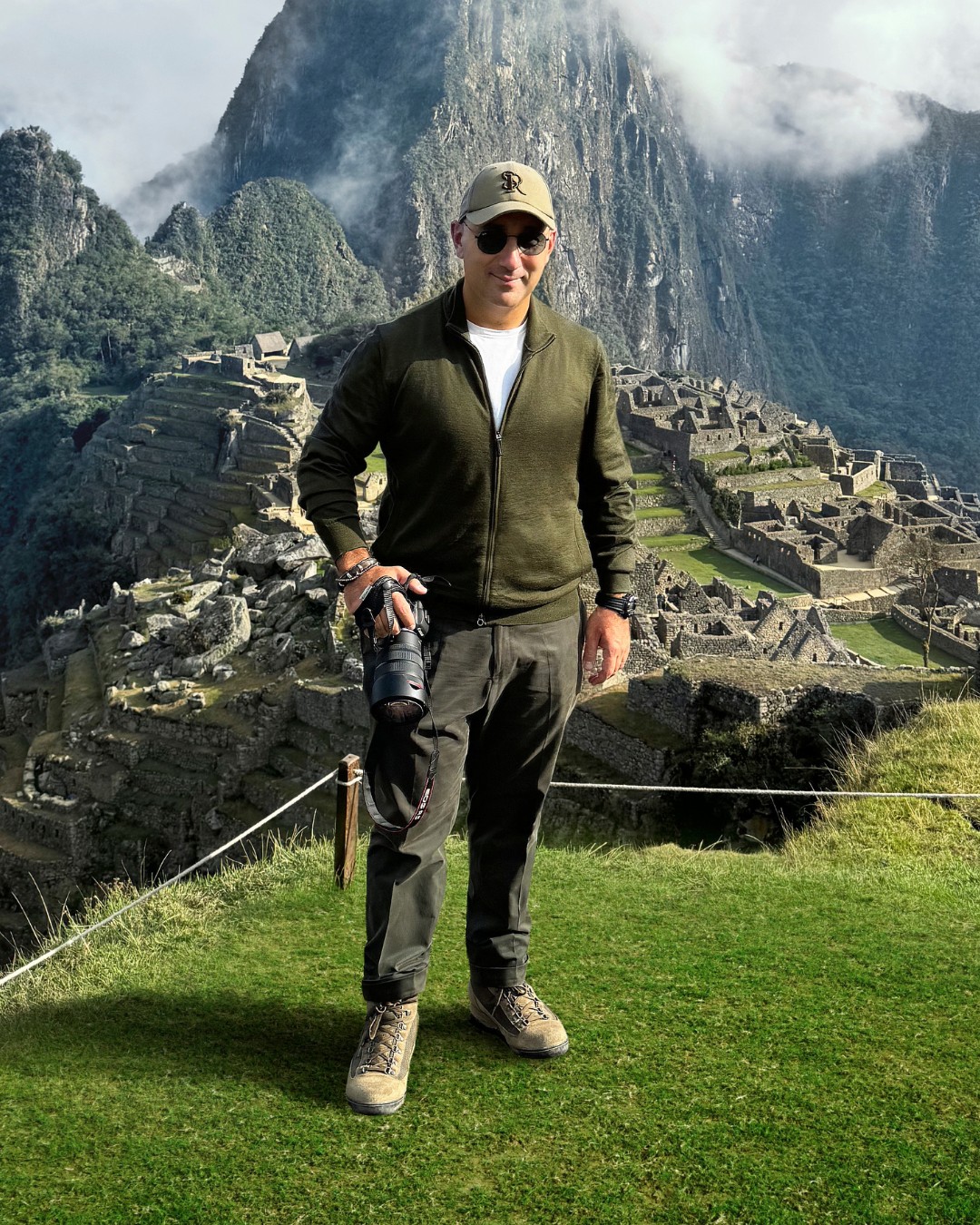
The dawn at the Ta Prohm temple has an ancestral feel that speaks to the soul. I wonder what could have wiped out a civilization like the Khmer. I think back to the wonders of Luxor, the era of the Pharaohs. To these people, capable of marvellous things, yet not enough to leave a mark of continuity through the centuries. I try to explain myself—Ancient Rome has disappeared, the empire vanished, but there remains a sort of continuum in the twists and turns of History. Greece also had its Minotaur, just like Persia, China, and Mongolia, which was also a stop of our SR Explorer project. There’s something, however, that unites all these mythologies: writing. From the papyri, the Qumran scrolls, and the writings carved in stones, when man decided to codify his messages, evolving from cave graffiti to the Cueva de las Manos. So, when we began to think about this new mission, during one of our video calls with Gianluca Tenti and Terry Garcia, we imagined a thin line that could link, around our narrative, an ideal journey in search of another great lost civilization: the Inca. A civilization about which little is truly known. Because what has reached us today is the result of word of mouth, of legends passed down, of spirits speaking through shamans. Because from Peru, after the era of the conquistadors, what arrived were stories that had been retold. Not that the chronicles written by Felipe Guaman Poma de Ayala aren’t fundamental. His writings, accompanied by drawings with Quechua and Spanish annotations, capture the years around the late 1500s. But the truth is that the Inca didn’t use written words. This makes our journey of discovery unique, through the Sacred Valley, the legendary Machu Picchu, the Conca Valley, and Titicaca, the world's highest lake. A journey in which the altitude hovers around 3,000 meters, rising up to 5,000 meters at Palcoyo. Because yes, we are explorers. We always have been, as confirmed by our latest international presentation at the prestigious headquarters of The Explorers Club in New York. We are and continue to be explorers on this mission, relying on what the great tradition of a people capable of building sanctuary cities on the peaks of the Andean chain, with terracing and rope bridges, has preserved of their communication.
I remain in awe when observing the “quipu.” It’s the only tool that international scholars and researchers recognise as the alphabet of an empire called Tahuantinsuyu, which in Quechua means “the four parts of the world,” it was so vast, including what are today the territories of southern Colombia, Ecuador, Peru, part of Chile, western Bolivia, and northeastern Argentina. The central state managed agricultural and manufacturing production with mandatory work quotas and an efficient system run by a body of officials. Of course, there was the sovereign, along with his consort and the virgins of the temple. There were techniques for working the land and building walls, a system of “sentries” who covered unimaginable distances in a sort of relay. There was weaving and the working of precious metals. Yet, the Inca lacked an essential tool for the functioning of an empire: writing. Why didn’t they ever develop it? It seems impossible to me. The only form of communication to be passed down was a unique and precise object called the quipu. The quipu (in Quechua khipu, “knot”) was a textile artifact made of knots and strings. Simple, almost like an intertwined necklace, yet capable of containing information that the quipucamayoc (experts of quipu) used to keep track of everything important. When the Spanish arrived in present-day Peru, their chroniclers were impressed by the amount of information these strings could hold. The Jesuit anthropologist and naturalist, José de Acosta, described them as: “Quipus are memories or registers formed by ropes in which different knots and colours correspond to different information. It is incredible what can be achieved with this method; everything that a book can convey in terms of stories, laws, ceremonies, and accounts is communicated with the quipus so precisely as to arouse wonder”. Indeed, wonder. That’s what I feel when I think that these noble and hardworking people communicated through fabrics. To create a quipu, a horizontally arranged cord (the main piece) was necessary, to which secondary vertical cords were tied, and to these, in turn, subsidiary strings were attached. The Inca made knots on the secondary and subsidiary cords to insert information. The information was, therefore, knots and coloured threads. They were weaving information!
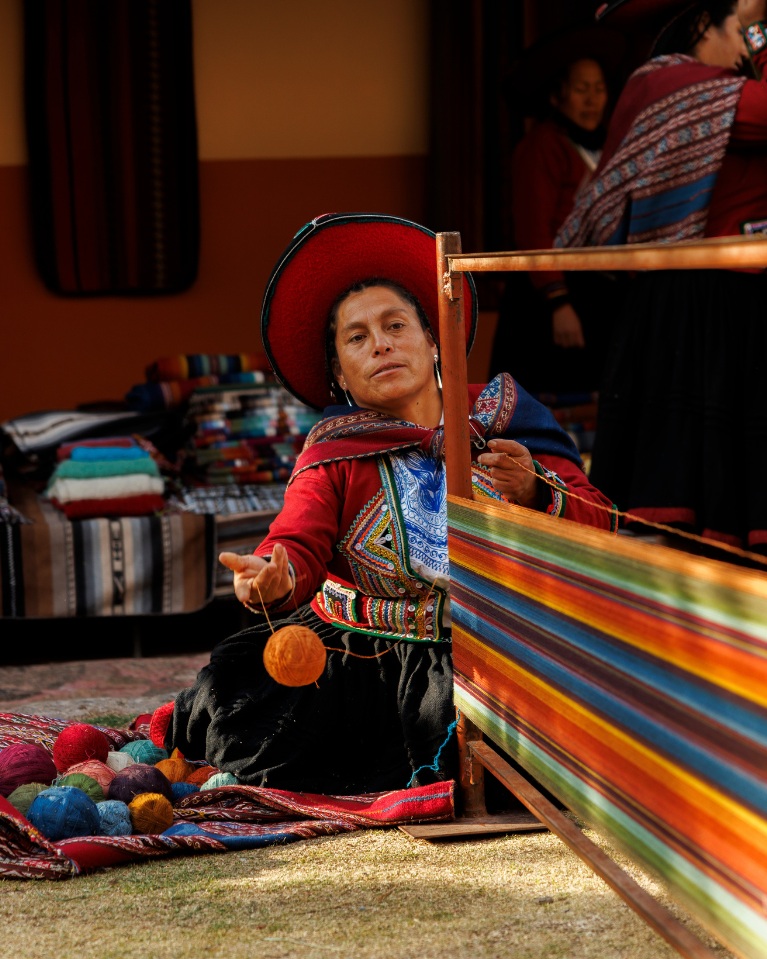
The length of the strings varied, but the main cord was always longer so that one of its ends remained free to roll up the quipu and store it when not in use. In some cases, I read, a distinctive element, such as a coloured feather, was added to make identification among similar items easier. Thus, preparing for this mission, I delved into volumes on weaving, in a land of alpaca and vicuña. I learned that the primary materials chosen for creating quipus were cotton and alpaca wool; only in some cases were vegetable fibres used. The strings had different colours within the same quipu, even within the same cord. The colours and the way they were intertwined gave it a polychrome appearance. The knots themselves came in different shapes: observing them, you can see they were intertwined and, once their function was fulfilled, they could be rearranged entirely differently. In every quipu, no detail was left to chance. It was a complex system that allowed them to handle administrative, genealogical, historical, and obviously religious data. Many researchers, as I wrote, have tried to decipher its code. In the 1980s, someone analyzed a network formed by 206 quipus to understand the meaning of variations between knot shapes, arrangement, colour, length, and intertwining. It was discovered that the numeric quipus had knots organized according to the decimal system. It’s also true that there were “historical” quipus that recorded the main events of the Inca dynasties, but the writing system hidden within them remains unknown to this day. The use and ancestral reference of these strings and their knots is perhaps what struck me the most, along with the discovery of an ancient patchwork fabric: it brings to my mind a creation my father made in the early 90s when he decided to make hand-sewn ties with such delicacy and precision that they are a pride of Florentine craftsmanship. I won’t venture further into the legends, the astronomical references, or the secret, yet fascinating, keys that might unlock access between millennial cultures. I watch the flight of the condor, continuing to marvel at the beauty of creation, ready to face a new mission.
