The Land of Myth
The Land of Myth
Filippo Ricci, Creative Director of Stefano Ricci
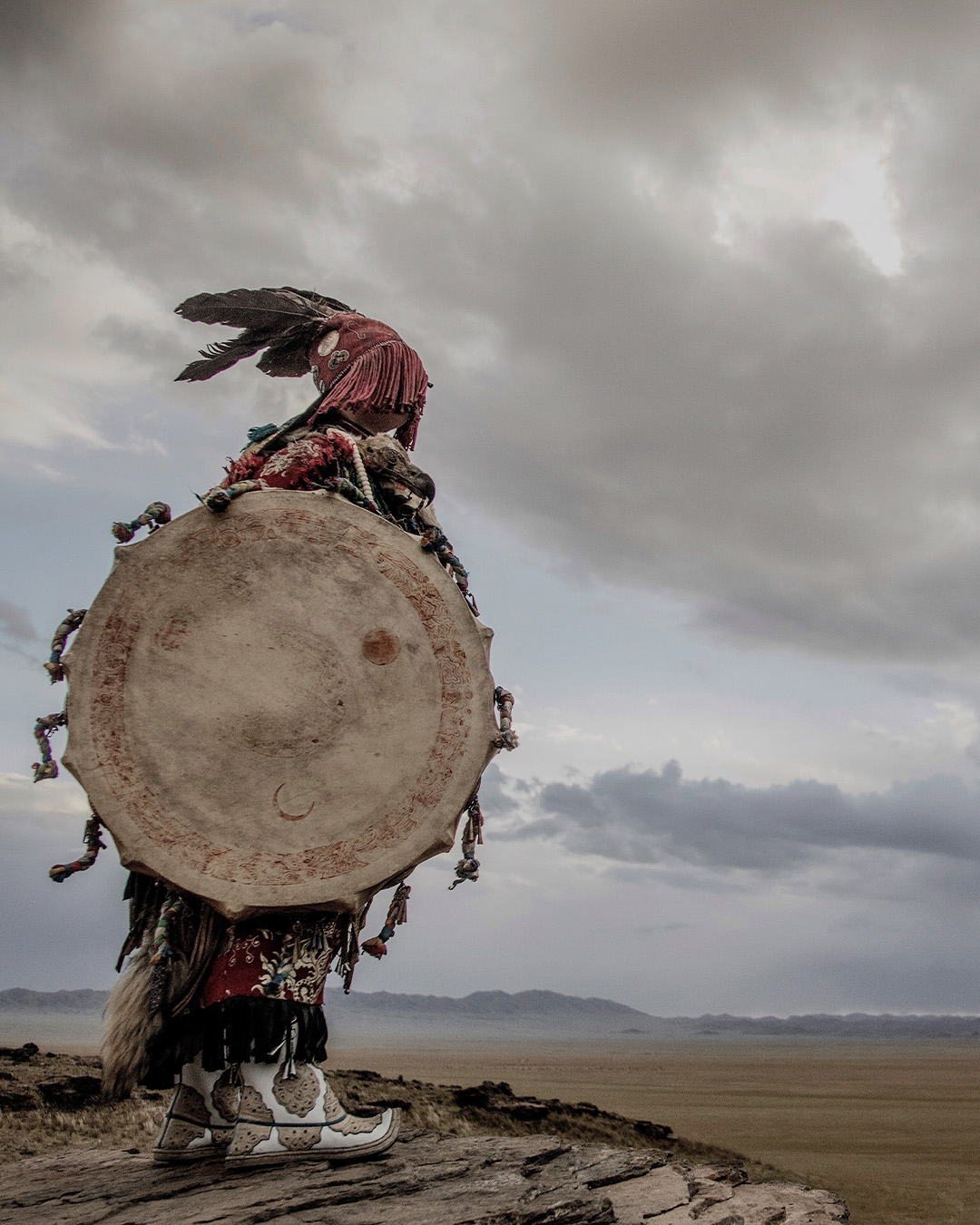
One of the questions we get asked most frequently by the international press is: why Stefano Ricci Explorer? The answer lies within these pages, as well as in the SR Issues dedicated to Luxor, Iceland, and Galapagos. This research project sees our brand engaged in a dialogue between nature and the changing planet. There is much talk on the topic of sustainability, but to gain a better understanding of it, it is essential to experience the changing world first-hand. This journey led us to Luxor, where the local archaeological sites, with their intrinsic value, are defining the future of tourism. The theme was further explored in Iceland, where we witnessed the melting of the largest glacier in Europe. The project continued in the Galapagos Islands; a pristine natural paradise protected by strict regulations. Here we decided to support the Charles Darwin Foundation in a project linked to the conservation of Giant Tortoises. Today the journey leads us to Mongolia, in support of the national plan to protect eagles and their natural habitat. As we outlined this new mission, we took Genghis Khan, the man who built the largest Empire in history, as a starting point. A few years ago, my interest was piqued by a quote I read in the Washington Post that defined him as the Man of the Millenium since he “greatly enhanced the linkage between the civilisations of the East and West […] and pioneered global communications”.
To us, Mongolia is the land of the Eagle Hunters, heirs to a Turkish tradition dating back to the 1600s. A story told through the daily life lived in the nomad tents, under an infinite sky, set in the Gobi Desert and its mysterious past. Before setting off on this expedition, we wanted to delve into the history of this land and the lives of two travellers: Marco Polo and Ibn Battuta. What we know today about Genghis Khan has been handed down to us through the tales told around campfires, in the caravanserais, where nomads, foreigners and merchants met. These men, encouraged by trade, were the very first explorers of fascinating exotic lands and later became guides to future generations of travellers. Through their work, the West discovered the story of Temujin, son of Yesügei the Brave and Princess Ho’ Elun. The boy was orphaned at a young age (his father was poisoned as an act of revenge). According to legend, he was a descendant of The Blue Wolf. What we know for sure is that in 1206, during a meeting of the heads of steppe tribes, he was elected Genghis Khan – universal ruler – thus entrusted with political, military, and spiritual power over the “people who live in felt tents”. He was able to unite competing powers, such as the Kyrgyz from Siberia, the Uighurs from Sinkiang, and the Kara-Khitans from Manchuria. All these groups under his rule rebelled against the neighbouring dominions. The Mongols (who took their name from the eponymous tribe) rose to power after the conquest of Beijing in 1215 and Samarkand in 1220. Genghis Khan’s vision united a territory spanning from the Yellow River to the Ural Mountains.


By reading the stories recounted at the time and some of the most accredited historical reconstructions, it is easy to recognise the ruler’s strategic abilities. He entrusted his “most talented subordinates” (Jebe, Kublai, Jelme and Subotai) with high-risk missions. What today experts would call “leadership”, was a system based on two essential principles: meritocracy within the army and promoting men based on their abilities rather than their origins. Giovanni da Pian del Carpine, the Franciscan missionary who visited the Empire after Genghis Khan’s death, reported that the combination of strict discipline with Chinese technology allowed the Mongols to obtain knowledge about ‘machinery’ until then unknown. This added to the aura of terror projected onto the conquered territories. But, since I am not a historian, I believe there is one more aspect to consider. His Empire re-opened trade routes, such as the Silk Road (in the North), that had fallen out of use in the previous centuries. The Medieval manuscripts, the very first globes and geographical maps surprise us today due to the lack of knowledge surrounding Northern Asia, China, and the Indian subcontinent. Maps were left blank. The space between the West and the ends of the Earth was filled with stories about nomad shepherds who became known as warriors and who then turned into knights and archers by adapting to extreme climates. It is extraordinary to think that their weapon of choice – the composite bow – was no different from the one used by the Scythians two thousand years earlier. Neither was the organisation of the army in multiples and submultiples, considering this strategy dated back to the 3rd century BCE.
However, the world had to wait until the end of the 13th century to learn about the mystery of these lands, through a text in Old French, Devisement du Monde. Rustichello da Pisa put in order the memories of a Venetian man, Marco Polo, who visited the court of Kublai Khan (Genghis Khan’s descendant). In the early 13th century, Kublai founded the first Yuan Celestial Empire, spreading from Eastern Europe to the Sea of Japan and all the way to China. This military-political unit, known as the Pax Mongolica, strengthened links between Asia and Europe like never before. Venice, a city deeply associated with trading with the East, certainly did not let this opportunity slip. Marco was able to set off on his adventure thanks to his father and uncle, who, years before him, had been received at the Kublai’s court. Upon their return, they were made ambassadors and charged with a mission to the Pope. The mission was sealed by a safe conduct pass, the “golden tablet”, known in Chinese as paiza and in Mongol as gerega. This engraved tablet allowed them to travel safely through Mongol territories. That is exactly where the seventeen-year-old Marco Polo wanted to reach in 1271. The long journey started with the landing in Acre, in the Holy Land. The Polos travelled through Eastern Anatolia and Armenia with the aim of reaching the Strait of Hormuz and setting sail for China. They travelled this part of the journey via land, joining the caravan trails. We learn about their plans in the book known as Il Milione (The Marvels of the World), which is not a diary, but an account of what Marco Polo saw and heard, leaving out all minor details. His fascination with this world is clearly conveyed in some of his writings.
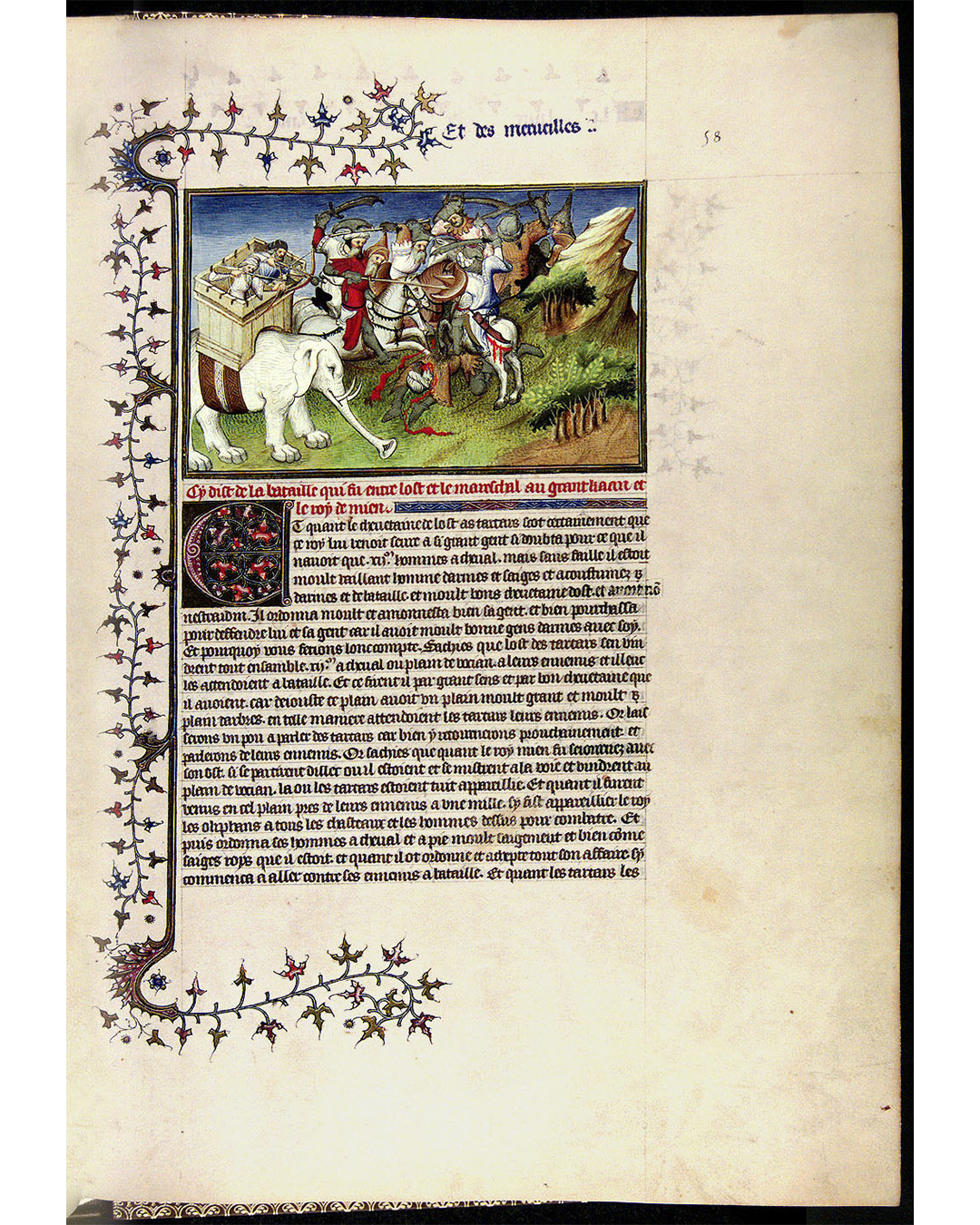
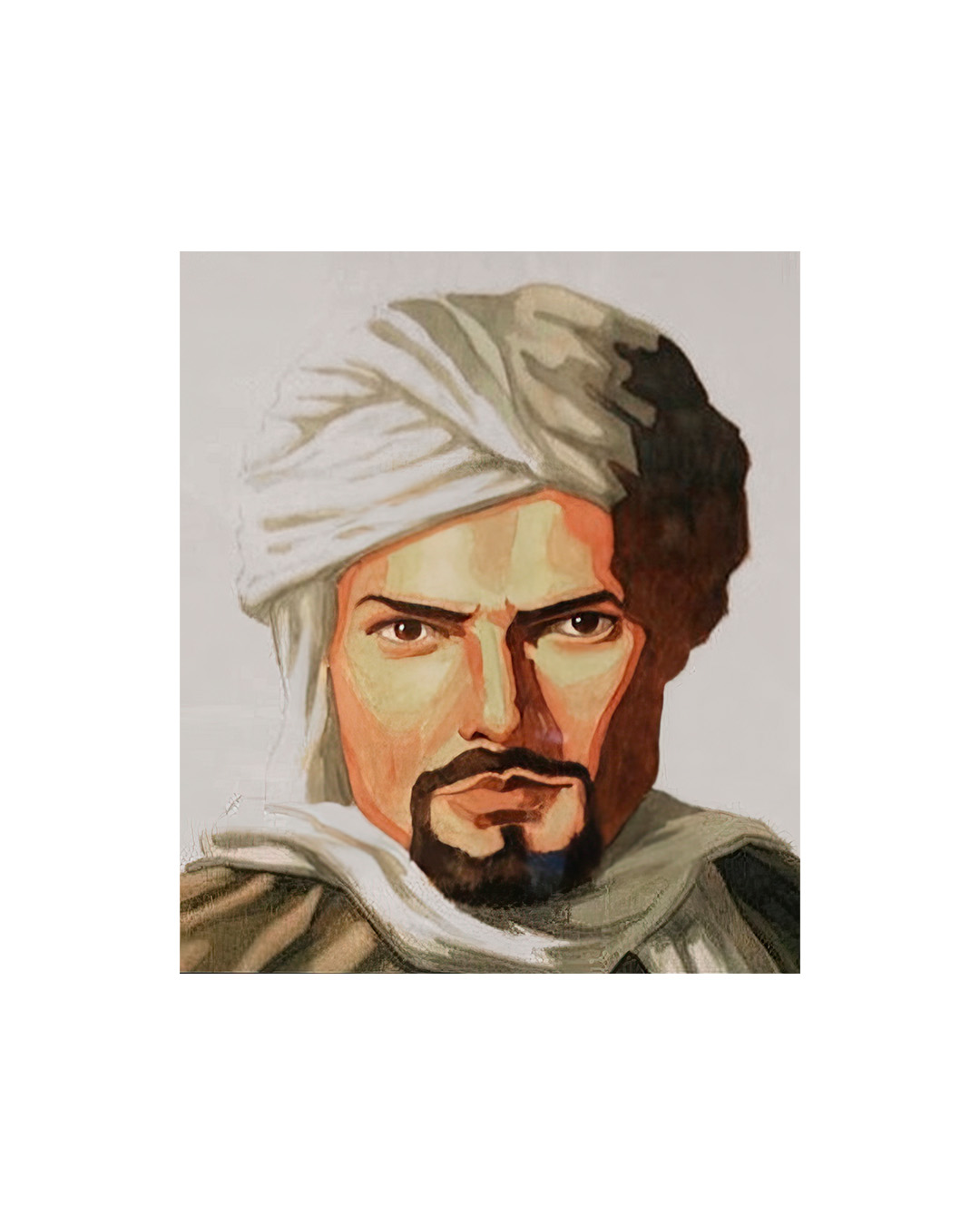
“And you must know that it is in this country of Armenia that the Ark of Noah exists on the top of a certain great mountain”, said Marco Polo referring to Mount Ararat. He described the Mosul realm as famous for its “silk, golden drapes” (he was referring to muslin – a fabric that had greatly contributed to the wealth of Venetian merchants). The Venetian explorer (whose 700th death anniversary will fall on January 8th, 2024) talked about Baudac (Baghdad), “which used to be the seat of the Calif of all the Saracens in the world, just as Rome is the seat of the Pope of all the Christians”. Once in Tabriz, he was stunned by “the finest and handsomest carpets in the world”. Furthermore, he mentioned Saba, where the tombs of the Three Wise Men are supposed to be, in “very large and beautiful monuments, side by side. And above them there is a square building, carefully kept. The bodies are still entire, with the hair and beard remaining”. He visited Yazd, a city grown rich by trading gold and silk drapes, and Kerman, where the “best falcons” were raised. And he travelled South, all the way to the Gobi Desert. The meeting with Kublai Khan was an important moment: “He [Kublai] made them [the Polos] stand and showed great joy, and asked who the youth was standing with them”. This introduction led to the young man’s appointment as a government official in the vast Empire at just twenty-one years old. This privilege allowed him to travel to Tibet, Burma, Cochinchina and India. He returned to Venice after twenty-four years away. The old-world order had changed. So much so, that, as a Venetian, he was jailed in Genoa, where he met Rustichello, to whom he dictated Il Milione. Around the same time, another individual from a different cultural and social background embarked on a journey that would later establish him as one of the world’s greatest travellers: Ibn Battuta. He left Tangier as a twenty-year-old to complete one of the five commandments of the Muslim faith: the pilgrimage to Mecca. He returned after twenty-eight years. During this time (one could even call it a lifetime), Ibn Battuta travelled extensively through North Africa and China, Southeast Europe, the Middle East, Southeast Asia, Russia, India, Kurdistan, Madagascar, Zanzibar, Ceylon, and the domains of Aragon, Granada, and Mali. Our knowledge of the world through Ibn Battuta is derived from his travel accounts, which were not written directly by him but were dictated to a scribe employed at the court of the Sultan of Fez. Ibn Battuta, he reported, was let down by the state of conservation of the famous Lighthouse of Alexandria, which was one of the Wonders of the World.
We know that he reached Mecca in 1326. He ate and slept in beautiful palaces, thanks to the hospitality of sultans amazed by the tales of his adventures, where he cultivated a rapport with his Muslim brothers. The skills of the Tatar Knights deeply impressed him, and he bore witness to a cremation ceremony in India. Venturing to the “Land of Darkness” (Northeastern Russia), he encountered locals trading in stoats and martens. Traversing the Silk Road, he reached the Maldives, enraptured by its breathtaking beauty. In India, he marvelled at a rhinoceros, while in Ceylon, locals spoke of Adam’s footprint. He weathered the Black Plague in Syria, braved chilling temperatures in the Golden Horde territories (covering present-day Russia, Ukraine, Uzbekistan, and Kazakhstan), remnants of the once mighty Mongol Empire. Upon his return to Morocco in 1355, he recounted his experiences in A Gift to Those Who Contemplate the Wonders of Cities and the Marvels of Traveling, later renowned as the Rihla (The Travels). This is what inspired our research. The call for adventure and exploration. The desire to experience life in Mongolia. Marco Polo journeyed through the Gobi Desert, where legend holds that a sea once existed, guarding a mystical White Island. Along the Silk Road, he observed the bustling trade of leather, fabrics, and gemstones. The ascent of Mongolia revived the trading routes that had been neglected due to tribal conflicts. Just how influential was his account? Two centuries later, Christopher Columbus carried a copy of Il Milione on his voyage to discover the New World. Inspired by Marco Polo’s writings, renewed interest in exploration emerged, bolstered by the financial backing of Western elites eager for new trade opportunities. While ships ventured westward, caravans took to the Eastern roads. Mongolia is a nexus of these ancient tales. Adventurers, spurred by legendary explorers, sought lands replete with palaces of gold and diamonds. Many believed these to exist in Agharti, an underground realm. It is said that one of its entrances is located in the Gobi Desert. Agharti is often linked to Central Asian myths, and similarly, the Tibetan Buddhist Kalachakra tantra speaks of a realm named Shambhala. Such tales fuel legends. Yet amid these captivating stories, the enduring legend of Genghis Khan, the life of Temujin, remains. While Europe was living through the Middle Ages, the steppes unleashed the Blue Wolf ’s power. A story told throughout history. A secret story. One that only the Eagle, undisputed queen of this kingdom, keeps and passes down through the generations, for the World to know the deeds and strength of the man who conquered the Earth.

