The Ancient Way of Mongolia
The Ancient Way of Mongolia
Chris Rainier, CEO and Founder of The Cultural Sanctuaries Foundation and National Geographic Explorer & Photographer
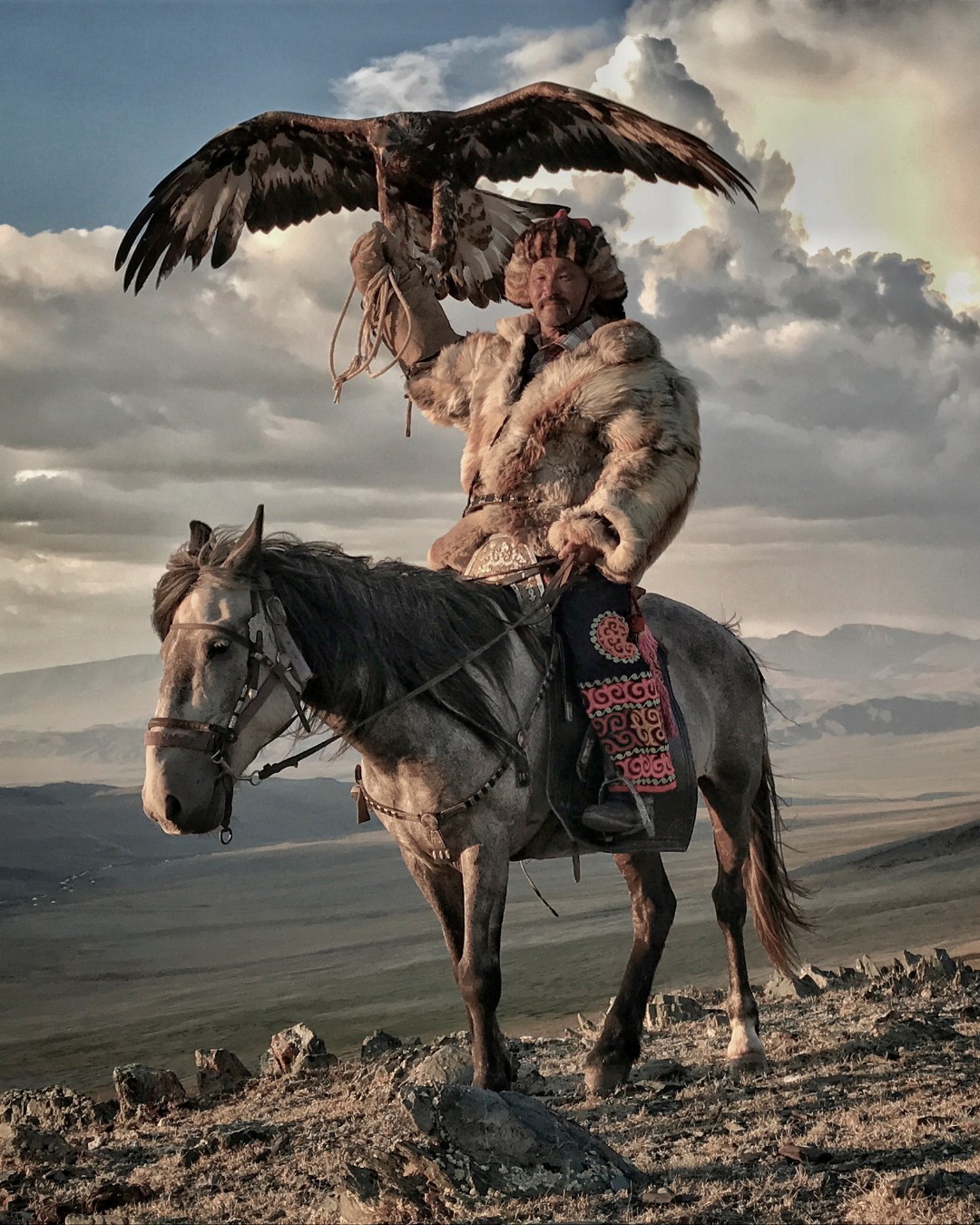
Mankind has walked the steppes of Mongolia since the dawn of civilization. After humans left Africa some 60,000 to 80,000 years ago, our ancestors made their away east across the continent of Europe and Russia and they hunted on the land now known as Mongolia. The journey would ultimately take some of these early nomads further east to cross the land bridge into the Americas. Subsequent conquering Empires would sweep across Mongolia for centuries – but none were as well known, revered and feared as that of the great Genghis Khan in the 12th Century. He united the numerous fighting empires scattered from the Asian oceans to the Caspian Sea and the eastern edge of Europe and all the way to India and created the Mongol Empire, then the largest nation ever to have existed - with a population of over 120 million people. Even today, the modern nation of Mongolia is vast, the size of western Europe. It stretches across endless valleys and grasslands from the Siberian north where the reindeer people still live a nomadic lifestyle to the west where the Kazakh eagle hunters reside in the Altai Mountains to the sand dunes and camels of the desert south. Mongolians have always been nomads and traders. When Genghis Khan conquered most of Asia, he opened up trading routes that included the famous Silk Road - camel caravan routes that reached the markets of India, the souks of Istanbul and the canals of Venice in Italy. With the creation of these vast travel networks connecting the East to the West came those seeking to understand and study the ways of distant lands. The Muslim explorer and scholar Ibn Battuta, born in 1304, spent most of his adult life traveling extensively in the lands of Eurasia and is considered to be one of the greatest early explorers in history. He logged over 73,000 miles of travel by camel, by sea and on foot, venturing into what would now be forty countries. The Mongol Empire was one of them.
Battuta’s book Travels in Asia and Africa, 1325–1354 featured some of the earliest illustrations of exotic landscapes and native culture and played an important role in bearing visual witness to places that most of his readers, and for that matter most humans alive at that time, could not have imagined and would never see. Another great explorer to cross the Mongolian expanse was Marco Polo, an explorer, merchant and writer from Venice who spent most of his adult life travelling and writing about his experiences in central Asia. He earned the respect of the royal court of Kublai Khan, the grandson of Genghis and the fifth emperor of the Mongol empire. Marco Polo’s famous book The Travels of Marco Polo would fire up the imagination of European traders and scholars and heralded an era of remarkable exploration of the lands and cultures across the Asian Continent into Mongolia from Europe. As a young boy, I voraciously read Marcos Polo’s book and studied the romantic tales of Genghis Khan. I dreamed that, one day, I too would travel to this magical and exciting land. Visions of its grassland plateaus, its rugged snow-capped mountain ranges and the famous singing sand dunes of the Gobi Desert danced in my imagination. As an explorer and photographer, I had travelled to the icebergs of Antarctica and to the jungles of New Guinea, I had trekked the Himalayas and I had lived with the Tuareg tribes of the Sahara Desert – but Mongolia always beckoned to me. It would take me another twenty years to eventually arrive here – when, in the early 2000s, National Geographic sent me to Mongolia to photograph its culture. It exceeded all of my expectations. I instantly fell in love with the heartbeat of this land - its beauty, its immensity, its emptiness. Of the population of just three million people, about half live in the capital city Ulaanbaatar. The rest are nomads living off and at one with the land with their horses and herds of sheep and goat. Of them, none were, to me, more photogenic, more beguiling, more exciting than the eagle hunting community in the far West.


After my first visit, I would return to Mongolia time and time again. I was drawn to the lifestyle and power of the eagle hunters and their remarkable relationships with the golden eagles, their horses and their land. I would travel for weeks on end, living with the families in their traditional Gers. Being with them, time marched to a different rhythm and I always felt changed and somehow rejuvenated and refreshed by my reconnection to the mountains and grasslands, the raw primordial nature all around me. On a glorious afternoon on one particular expedition, when we were at least five days from the nearest trail, I was photographing a proud eagle hunter holding his magnificent eagle aloft as the sun set high on a mountaintop. Before I opened up my camera, I took some photographs of the hunter on my iPad, as I often do in my photoshoots, and I showed them to him so that he could see what I was doing and could feel more involved in the process. He immediately smiled broadly and said that he really liked a particular image; could he have a copy? I went to get a notebook and pen out to write down his address, already wondering about how I would send it to him when I got home. From underneath his furs, the hunter pulled out an iPhone and, holding it out towards me, said in broken English, “Can you just Airdrop it to me now so that I can post it on Facebook?” I smiled and said, “Of course”. What Mongolia teaches us - if we pause to understand and to learn - is that while its people live in the modernity of the 21st century, they remain steeped in rich culture and traditions, descendants of the great Genghis Khan. Even while texting on their phones, they have not forgotten the ancient ways of living on the land and they listen to the wisdom that lies embedded in the earth. It is a lesson that I will always hold close to me. I always return to the pulse of this ancient land. It is here that I continue to seek what is so rare in our modern world: a unique sense of authenticity and rich tradition.
