The Evolution of Exploration
The Evolution of Exploration
Terry D. Garcia, CEO of Exploration Ventures
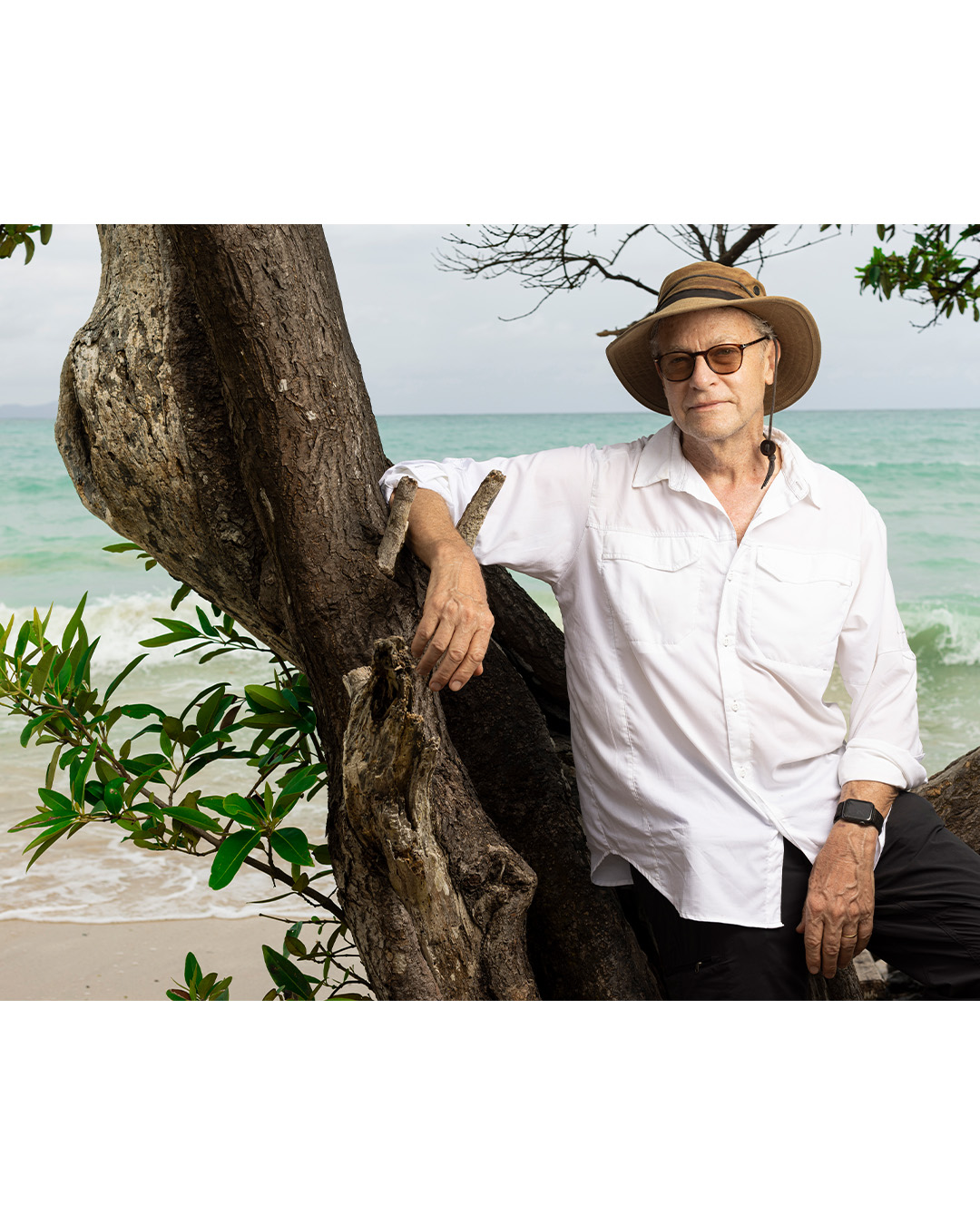
It has been more than two decades since my first visit to the Galápagos Islands. In preparation for that trip, I read among others Charles Darwin’s narrative of the five-year voyage of the HMS Beagle and his account of his five-week visit to the Galápagos Islands in 1835. I also perused countless photographs of the islands and their wildlife in National Geographic’s vast archives. The images were extraordinary, and viewing them, I wondered, would the place live up to expectations? I needn’t have worried. Galápagos is one of the few places in the world where reality can surpass one’s imagination. Seeing the Galápagos Islands for the first time is an awe-inspiring experience. The islands are unlike any other place on earth, and the chance to observe their unique wildlife and landscapes up close is an opportunity that few people ever experience. Since my first visit, I have made many subsequent trips to Galápagos. I have marveled and delighted at the Galápagos’s unique biological diversity and its extraordinary land and seascapes. I have experienced the sense of isolation and tranquility that comes with being on the islands. That sense of wonder and excitement was just as intense when I recently returned to the Galápagos Islands with the Stefano Ricci Explorer team. It was as though I was seeing the islands for the very first time.
The Galápagos Islands are a remote archipelago in the eastern Pacific Ocean, approximately 600 miles off the coast of Ecuador. When you first arrive at the islands, you are immediately struck by their rugged, volcanic terrain and the crystal-clear waters that surround them. Made up of 19 islands, each island has its own distinct character and wildlife. The landscape is stunning, with dramatic cliffs, lava fields, lush, green Scalesia forests, and white sand beaches that seem to stretch on forever. The Galápagos Islands are surrounded by one of the richest marine ecosystems in the world due to the confluence of three ocean currents. On land, the flora and fauna are unique and are found nowhere else in the world. When exploring the islands, one finds an incredible array of wildlife - giant tortoises, marine iguanas, blue-footed boobies, sea lions, Galápagos penguins, and a variety of bird species. These animals, most of which are naïve to humans, have evolved in isolation and have unique adaptations that allow them to survive in a sometimes harsh environment. Due to limited economic development and strict conservation regulations, the Galápagos remain largely undisturbed by modern society. The islands offer a glimpse into a world untouched by time and appear much as they did when Charles Darwin visited them in 1835. Darwin’s work on the Galápagos Islands, during which he observed and collected a diverse array of plants and animals, played a critical role in the development of his theory of evolution. That theory fundamentally transformed our understanding of the natural world. His studies of the unique species found on the islands, such as the Galápagos finches, helped him develop his theory of natural selection, which proposed that the characteristics of species that are better adapted to their environment are more likely to be passed on to future generations. Darwin observed that there were 13 different species of finches on the islands, each with a different beak shape and size. He hypothesized that the differences in beak shape were related to the birds’ diets and that over time, the birds with the most advantageous beak shape for their environment would be more likely to survive and pass on their genes. Darwin’s theory of natural selection was a significant departure from the prevailing views of his time on the origins and development of life, which held that species were fixed and unchanging. By proposing that species could change over time through a process of natural selection, Darwin challenged prevailing orthodoxy and revolutionized the field of biology.

Darwin’s influence, however, extends far beyond the theory of evolution. Darwin’s work in the Galápagos is the foundation for today’s efforts to conserve biological diversity and habitats. Understanding how species adapt to changing conditions and the importance of genetic diversity and ecosystem function, informs conservationists’ efforts to protect and preserve threatened species and their habitats. As in Darwin’s time, the unique nature of the Galápagos Islands makes them today an ideal natural laboratory for the study of evolution and ecology. Charles Darwin in many respects is the father of modern-day exploration. His work in Galápagos dramatically illustrated the inherent value of exploration and its potential to profoundly change how we view the world. Darwin’s ideas also transformed the way scientists approached their work. Rather than merely cataloguing and collecting specimens, exploration and scientific research became increasingly focused on understanding the natural world and its processes through observation and formulating and testing hypotheses. It was Darwin’s advocacy of rigorous scientific inquiry that has inspired generations of explorers to venture into the world’s most remote and exotic regions in pursuit of truth and knowledge. All of this is a consequence of a brief visit to the Galápagos Islands.
