An endless source of fascination
An endless source of fascination
Terry D. Garcia, CEO of Exploration Ventures
India has been an endless source of fascination and inspiration the world over. This has certainly been true for countless authors, journalists and adventurers for centuries. I discovered this firsthand when I joined National Geographic, which over its more than 100-year history returned to India, time and time again, publishing more than 70 articles on the subject, producing dozens of television shows and supporting hundreds of exploration and scientific research projects throughout the country. And little wonder. India’s influence through the millennia has extended far beyond its geographical borders, as its culture, trade, and philosophies traveled across continents, influencing civilizations in Southeast Asia, the Middle East, and even Europe. India’s rich cultural tapestry is woven through history, shaping the very essence of human civilization. One of the six “cradles of civilization”, India’s Indus River Civilization, which thrived over 5000 years ago, was one of the earliest examples of advanced urban planning and infrastructure.

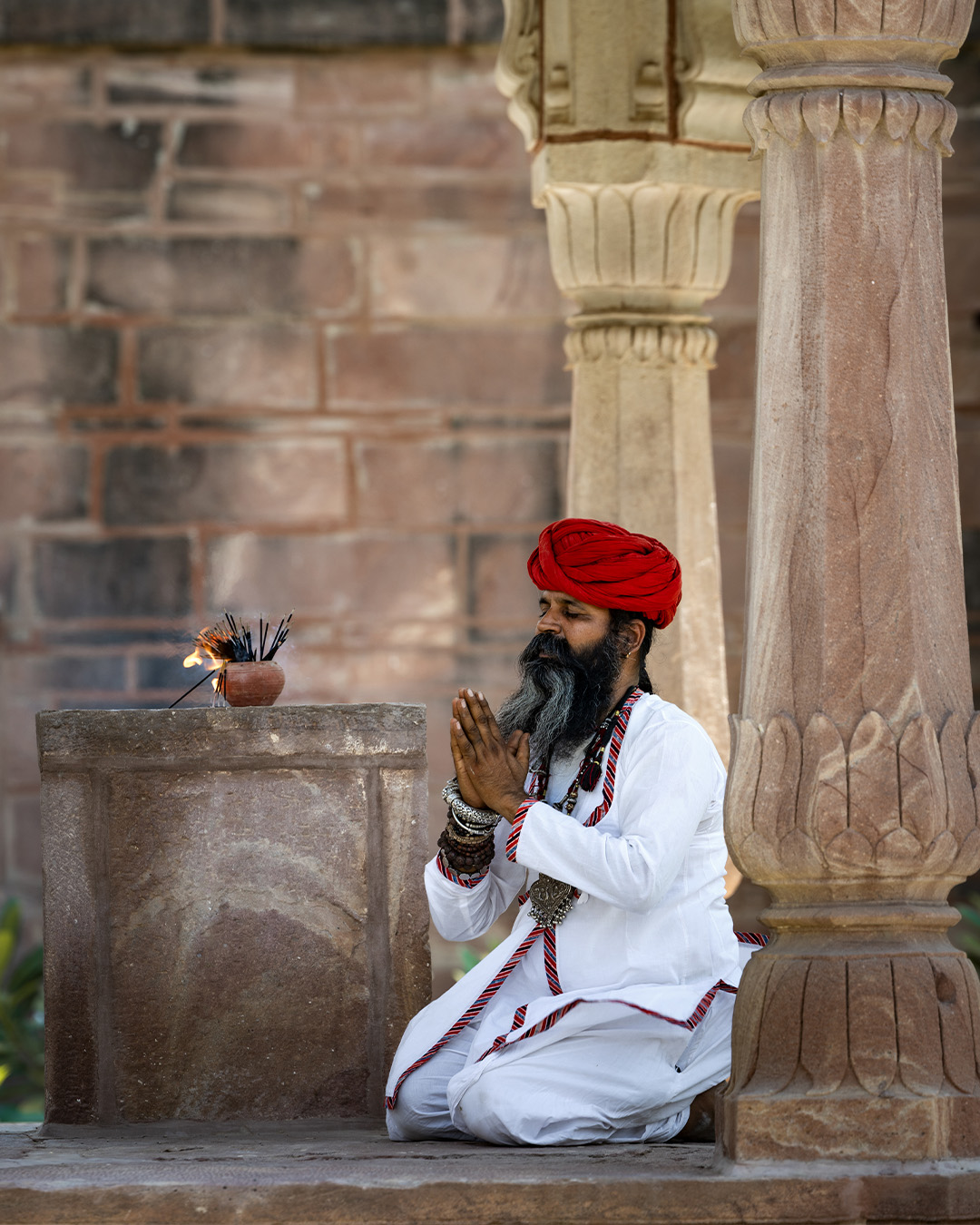
India is the birthplace of four major religions (Hinduism, Buddhism, Jainism, and Sikhism) that spread and influenced spiritual practices worldwide. There is evidence suggesting ancient Indian explorers were among the earliest to sail through the Arabian Sea and the gulf of Persia as well as the Indian Ocean trade routes. Indian traders and mariners from the Indus Valley Civilization established maritime trade links with Mesopotamia and by 400 BCE, Indian merchants were carrying out trade as far as Bali, Java and Sumatra. Beginning in the 2nd century, India’s strategic position on the Silk Road and Spice Trade routes which went through Rajasthan, the focus of our latest explorer mission, resulted in commercial exchanges and cultural diffusion extending from Europe to China. Ancient India’s influence on scientific thought and our understanding of the world was profound with lasting impact. Indian mathematicians developed the concept of “zero”, introduced the decimal system and laid the foundation for algebra and trigonometry. Indian astronomers, centuries before Copernicus, proposed that the planets in our solar system revolved around the sun. The 6th century Indian physician, Sushruta is often referred to as the “Father of Surgery” and India’s 3000-year-old Ayurveda system of medicine with its focus on holistic healing is considered to be one of the world’s oldest systems of medicine.
Rajasthan is not only the largest state in India by area but also one of the most culturally and historically rich. Its name means “The Land Of Kings” and Rajasthan is renowned for its regal architecture and proudly hosts nine UNESCO World Heritage sites, including the city of Jaipur. On our journey we marveled at its grand forts and palaces as we experienced the region’s unique geographical features, its rich diversity of ecosystems and a stunning array of flora and fauna including the revered but endangered Bengal tiger. As has been the case with each of our previous expeditions, Mission Rajasthan served as a reminder of exploration’s essential role in advancing our knowledge and protecting the health of the planet. We know from our conversations with explorer and conservation biologist, Dr. Krithi Karanth, that Indian scientists and conservationists are at the forefront of addressing some of the most vexing conservation issues facing us today, such as habitat loss, and human/wildlife conflict. At a time when so much about our planet is changing, the work of discovery and exploration is more important than ever. The simple truth is we can’t manage or protect what we don’t know. As our travels came to an end, the words of my old friend and longtime National Geographic editor, the late Keith Bellows, echoed in my mind. He once said of India: “There are some parts of the world that, once visited, get into your heart and won’t go. … India is such a place. When I first visited, I was stunned by the richness of the land, by its lush beauty and exotic architecture, by its ability to overload the senses with the pure, concentrated intensity of its colors, smells, tastes, and sounds. It was as if all my life I had been seeing the world in black and white and, when brought face-to-face with India, experienced everything rerendered in brilliant technicolor.” He was so right.
